
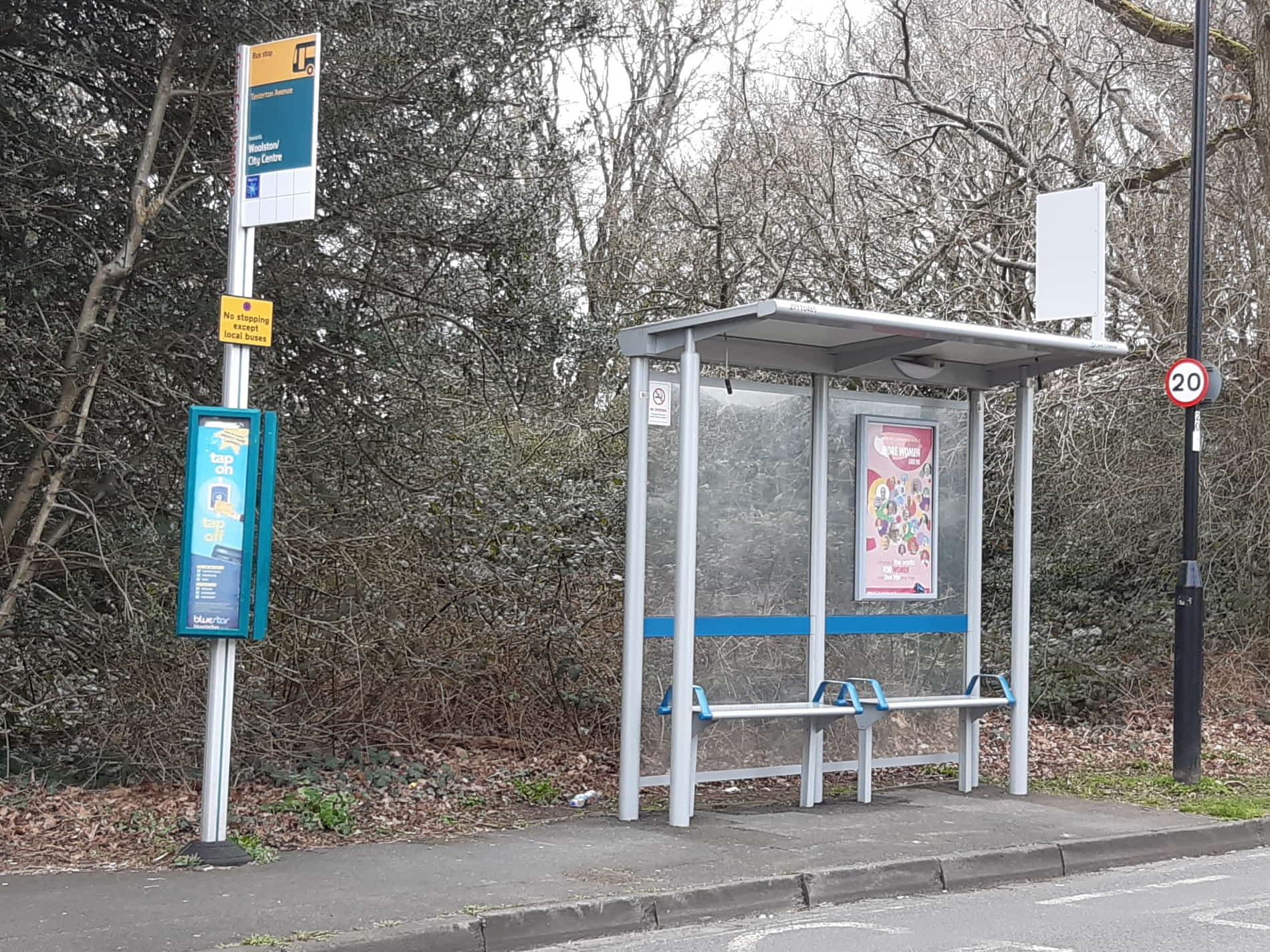
We are often asked what is the quintessential item to include in a care home or dementia garden. The truth is that there is no ‘one size fits all’ as far as garden features are concerned. Instead, we prefer to focus on helping care settings avoid adding, no doubt with good intentions, elements that can end up becoming costly and confusing gimmicks.
During our study we saw an internet ‘fad’ take hold like a forest fire; this was the bus stop installed in many care setting gardens. These were variously installed to provide a seating area, sometimes with covered canopy or as a means to calm, deflect or distract residents for a period of time. But is it respectful to encourage someone to sit and wait there when no bus will ever arrive? We wondered how someone might react when no bus comes, or they discover that no bus will ever stop there. We felt a strong need to challenge the ethics of the way this, and other similar, features were being used.
Why is a ‘real’ life feature, such as a bus stop, which is more usually found in public spaces, felt to be beneficial within a garden when no ordinary garden would contain one?
 We have also seen phone and post boxes, vehicles and farming equipment in care home gardens too. Why is this? What does the setting hope to achieve? We can understand the motivation to recreate a sense of local or national identity through these iconic and uniquely British features but how appropriate and relevant would they be to the lives of the residents currently living there?
It is also worth exploring the motivation behind wanting a typical street feature in a domestic garden when there may well be a real one a very short distance away from the care setting itself. What is stopping staff accompanying residents to post letters in the real post box that is just along the street? Answering this question truthfully may be the key to revealing deeply held attitudes towards Health and Safety, the relationship to the world beyond the home or even the assumption as to whether staff and residents are ‘allowed’ to go there.
Designers have some responsibility too for the proliferation of many of these gimmicky features in care setting gardens. In one rural care home in southern England we spotted a tractor in the back garden. The reasoning for this, we discovered, was related to the rural context of the setting but further investigation revealed that most of the residents had worked in City professions and lived suburban lives. In effect, these features risked becoming ‘gimmicks’: expensive and short-lived features that become irrelevant and pointless to the residents within a matter of weeks (if not sooner!) and in some cases adding a degree of confusion to those living with dementia.
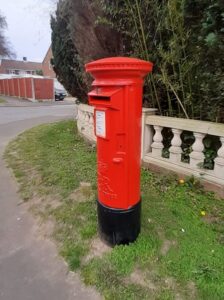 We were concerned about the impact these types of features could have, not just on care home budgets and on the successful delivery of person-centred care, but also on the reputations of designers and outside specialists who may not have considered their validity or appropriateness within a particular care home. We aren’t saying that, a post box (for example) would not be appropriate in a particular home, but simply want to ensure the decision to install these features is taken in a considered way, and that they relate to that particular care home, outside space, locality and residents so they can engage meaningfully with these features.
We wondered if it was possible to install any of these features so that it does not become a gimmick? Yes it is, but with care, and so we developed a four-question ‘Checklist Tool’ that you can use to sense-check features, elements and even activities within the garden.
The Checklist tool is designed to be used to review the appropriateness of activities or garden features to avoid introducing gimmicks (features that have little value or meaning to your residents), infantilising residents (engaging with them in a non-adult way) or that may add to, rather than reduce, confusion for residents living with dementia.
To use this Checklist, we pose four simple questions:
- ‘Is it purposeful?’
- ‘Is it realistic and in context?’
- ‘Is it relevant and/or meaningful?’
- ‘Can the feature be included in wider activities at the setting?’
The more questions you can answer with a ‘YES’, the more likely that the feature will engage your residents meaningfully and become an integral part of the activity provision at the setting.
More information about our Checklist Tool can be found in the:
- Article written for National Activity Providers Association (NAPA) – https://stepchange-design.co.uk/wp-content/uploads/2016/07/napa-living-live-spring2015.pdf
- Publications in our ‘Why don’t we go into the garden?’ series along with other helpful tools – https://stepchange-design.co.uk/shop/
Our ‘Why don’t we go into the garden?’ series of Books and Tools provide a range of support to both the Care and Design sectors with the aim of improving residents lives, enabling them to step outside as they wish.
Step Change Design focuses on encouraging care settings to take a fresh look at their care culture practices helping to embed Person-Centred care in order to enable residents to engage actively and meaningfully with their outside spaces. Our work is based on our large scale research project to understand why care setting gardens are not more actively used. They also support Garden Designers in working effectively with Care clients in an approach to delivering design support they call ‘Relationship-Centred Design’.
We provide a range of services to support care settings and garden designers in creating actively used care and dementia gardens.
This Blog is based on an original series of articles written for Bright Copper Kettle an organisation providing resources and training for Activity Co-Ordinators in Care Homes.