
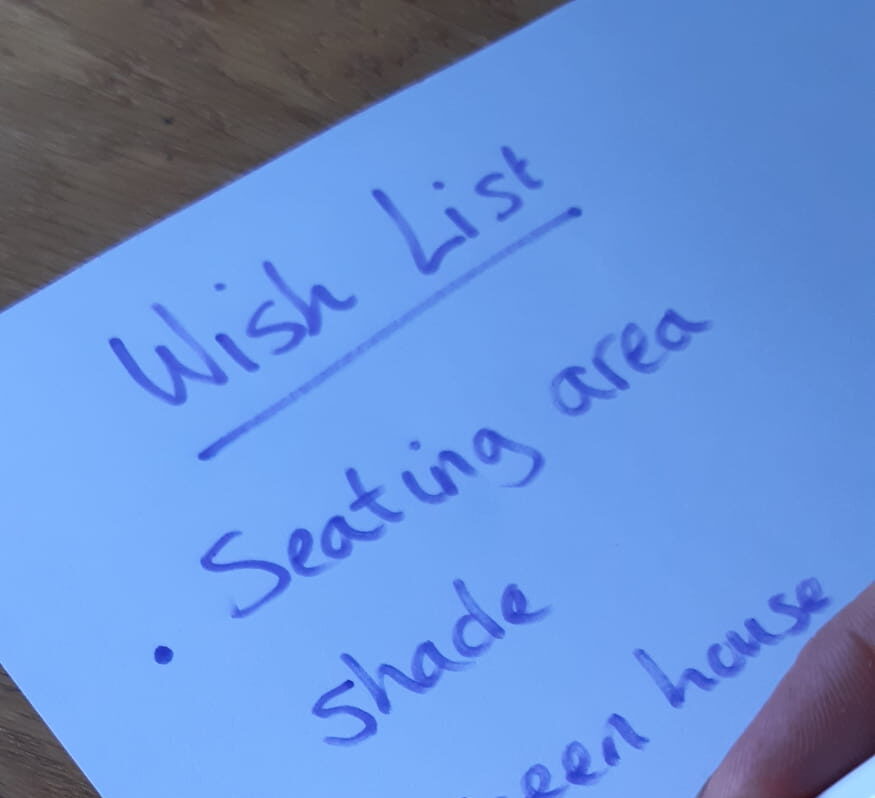
A typical site analysis checklist for garden designers, landscape architects and other outside specialists, is likely to include: site orientation, soil condition and pH, existing plants, client’s wish list…and much more. However, when it comes to organisational settings, like care homes, do you consider assessing the organisation’s culture, i.e. its current practices, attitudes and values in relation to the garden?
Our research into what it takes to create actively used care home gardens identifies the key role of organisational culture in ensuring any garden we create is successfully used long after the novelty period following its installation is over. Furthermore, those care settings delivering truly person-centred care will be engaging with the garden pro-actively and throughout the year because their care culture values engagement outdoors with their residents, as and when they wish.
So what does this mean for designers?
The initial brief from your care setting client is likely to be influenced by their beliefs and assumptions about both the role of the garden in the overall care provided and the way they respond to their residents wishes and desires regarding the outside space. For settings that maybe struggling to step outside, or perhaps that tend to blame the garden for its lack of use, this may mean that their initial brief is overly dominated by the expectation of the garden, and the elements in it, to drive engagement outside. This is as opposed to understanding the influence of their own practices that may have avoided going outside or created unnecessarily onerous obstacles to engaging with the garden.
By contrast, settings that are focused on delivering resident-driven engagement all year round are far more able to articulate what they need, and wish to do outside, even to the extent of providing examples and justifications for their specifications.
What does this look like in practice?
A good Site Analysis Checklist for care settings would seek to identify and evaluate the current care culture (the beliefs, attitudes and values that inform how they deliver care at the setting in relation to garden engagement) through observation, questions and checking actual practices with stated procedures and processes etc., both indoors and outdoors.
This may include understanding: how the setting includes the outdoors in its overall experience? How easy is it to go outdoors? Can you see the outside space clearly? How does the setting respond to stepping outside in all weathers? Is there suitable clothing easily to hand (e.g. coats, sunhats, umbrellas, blankets) that indicate rapid or spontaneous response to a request to go outside by their residents?
Without cross-checking current activity and engagement levels with the garden they already have, acting on the Client Brief alone could hold back their future engagement outdoors. This is because the setting, and even we as designers, may be assuming that the new garden design will draw residents outside in lieu of the care staff’s role in enabling this activity to happen.
Put simply, in settings that readily blame the garden and are struggling to use their existing space a new garden alone will not ensure the garden will be actively used. Once the novelty of the new space has worn off, often as little as 12-18 months later, the setting’s ingrained and pre-existing care culture practices will likely cause the organisation to revert to the attitudes and values it already had prior to the new garden’s creation.
We believe that gardens should be actively used over the long term, certainly long after we have left, and that a successful garden design project depends on the care culture practices at the setting being able to engage meaningfully with their new outside space. After all, who would want to be associated with a garden that ‘fails’ to engage staff and residents after the novelty period?
Moreover, where a new garden fails to be used as expected it is highly unlikely that the care setting will call back the same designer, and often the garden is blamed. In fact, we know this to be the case. Debbie was asked to re-design three care home gardens that had been previously designed but not used and this clearly unsatisfactory situation is what contributed to our carrying out our research project.
Assessing organisational culture to ensure a successful investment in your Garden Design Intervention
Including an assessment of the organisational culture at play during the Site Analysis phase will identify potential anomalies or contradictions and enable you to suggest preparatory work on the part of the setting to bring staff and residents to a state of readiness for engaging purposefully with their new outdoor space. This may require pointing out where the Client Brief is at odds with the way they actually engage with their outside space as identified via your enhanced Site Analysis activities. This may mean your design intervention is delayed for a period of time, or delivered in phases, allowing the care setting to focus on developing care culture practices that will result in a well-used and loved outdoor space. This is what we call Relationship-Centred Design and is an approach for ensuring the design intervention represents good value for money and a sound and enduring investment on the part of your Client.
The ’Why don’t we go into the garden?’ series of books and tools supports both designers and care settings to assess the role and impact of organisational culture into any proposed garden design changes through our ‘Relationship-Centre Design’ approach.
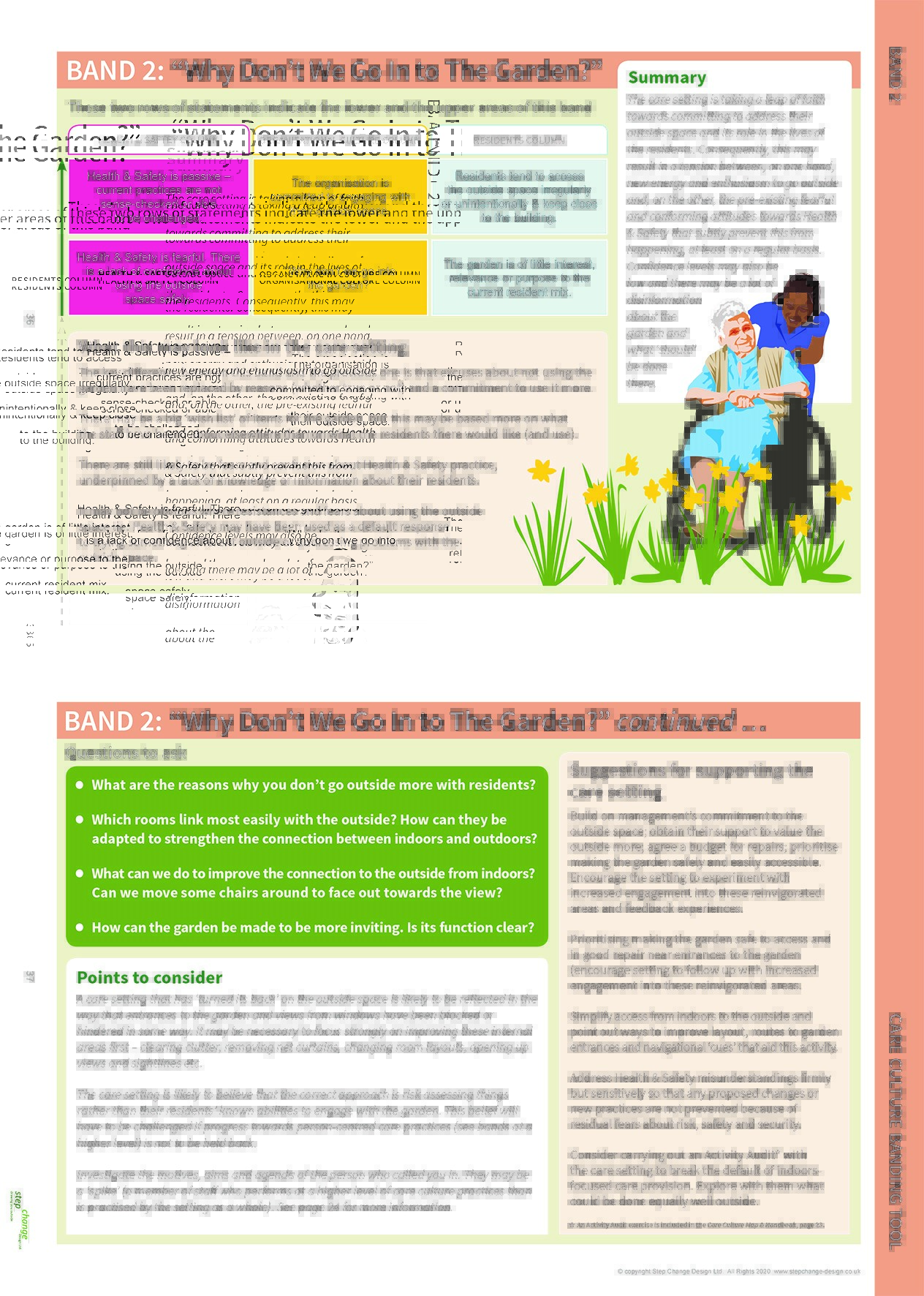
Our Designer focused handbook contains a detailed ‘Care Culture Banding’ tool that enables the Designer to capture the current care culture through a series of questions to ask, areas to investigate and then guides the designer to provide the most appropriate support based on their current culture in relation to person-centred care. This also supports the designer in articulating where the risk may be to their new garden becoming under-used and the role the care setting has in its future success.
This still allows the designers to use all their creative skills, while delivering their design solutions in ways that enables the organisational changes to also take place, before or alongside any garden changes, that can ensure the gardens you create are used long term, benefitting the whole home including the residents who live there, visiting families and staff too.
Step Change Design focuses on enabling residents in care settings to engage actively and meaningfully with their outside spaces. Our work is based on our large scale research project to understand why care setting gardens are not more actively used.
Our ‘Why don’t we go into the garden?’ series of Books and Tools support care homes and garden designers to create improved practices through applying the learning around the influence of organisational culture on increased engagement with the garden. We provide a range of services to support care settings and garden designers in creating actively used care and dementia gardens.
This blog is based on an earlier article shared on LinkedIn in January 2025.