
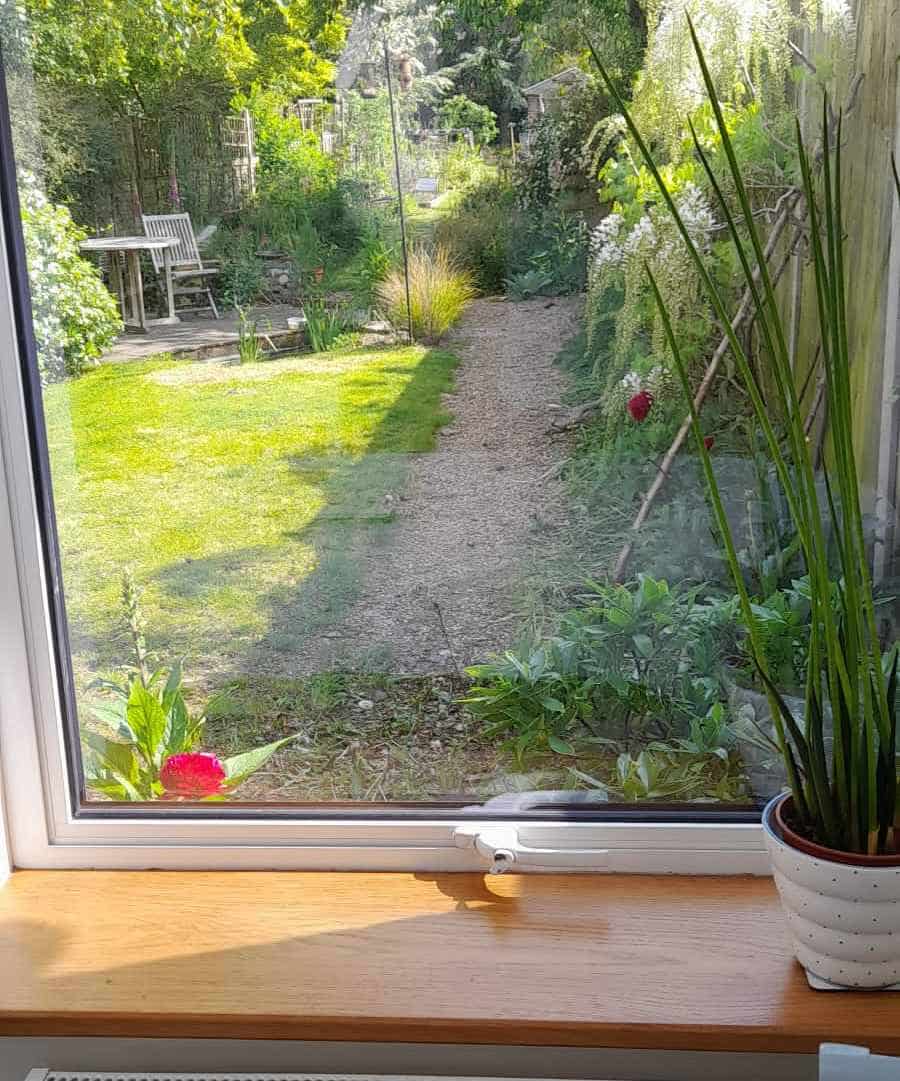
This blog introduces some of the key evidence-based factors on what may be holding a care setting back from engaging their residents more actively with their outside space. Based on our extensive research project into what makes for actively used dementia and care home gardens, here we focus on the often subtle and subconscious resistances that might be at play and why this may require some ‘internal’ work first to address any subconscious attitudes and beliefs that staff may have about stepping outdoors.
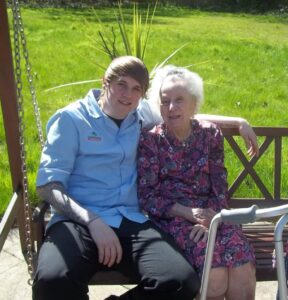 Stepping outside is something most of us do every day and because it feels so ‘normal’ this simple activity can be easily taken for granted. For those living in a care setting, however, and particularly for those who may need a hand to be able to step outside, this may require some extra effort on the part of both the resident and their carers.
It is worth reminding ourselves of why it matters: being outside has long been proven to be good for us all. It provides important physical and mental health benefits including: increased vitamin D uptake, regulating sleep patterns and improved mood. These can be even more important for a person living with dementia. With this existing scientific knowledge we focused our study not on should we go out, or is it good for us, but instead on why this was not being acted on more. And so we called our study, ‘Why don’t we go into the garden?’
Our study identified a direct correlation between more Person-Centred care practices and greater engagement outside. So with this in mind how can we make this an easier part of normal care home activities? Perhaps the starting point would be to take a look at how some care settings already manage this successfully on a daily basis. What is it about their care culture (the way they do things) that joins together both the indoors and the outdoors into an almost seamless environment of care that means that residents can easily enjoy going outside on any given day as and when they wish?
Care ‘culture’ is where the subconscious attitudes, habits and routines reside that manifest as the way things are done in a particular care setting. Consequently, it is here that many of the obstacles holding a setting back, and also the solutions, to accessing the outside space will be found. What we need to do then is to become aware of those attitudes holding back engagement with fresh eyes, questioning our assumptions of what is, and is not, possible, seeking examples of others who are clearly making this happen and testing out new approaches purposefully.
Begin by considering ‘Why do you believe you are not using the garden you already have more?’ and sense check your answers:
- if you find yourself blaming the garden (unless it is dangerous – then get this fixed) it is very rarely the garden’s fault so think again it is more likely your organisational culture, your current care practices habits and belief – look afresh.
- If you feel you need more things outside, work out what you can do with what you already have first, begin there and build from this. Not having the ‘stuff’ is no reason to simply step out and giving it a go even with limited physical resources
- If its about needing more time consider how much easier caring for happy residents is, and for those who wish to go outside how can you make their day and lighten your load too? The garden ultimately is just another room with an ever changing scene to entertain, enjoy and immerse yourself and your residents in.
So ‘Why don’t we go into the garden?’
Engaging more actively with the outside space begins with a review of the habits and usage patterns that make up your activity and care plans. Helping to overcome the key assumptions that hold you back in stepping outside in your existing garden is likely to reveal new ways to engage and ways to create greater enthusiasm and interest in the world beyond the threshold.
Step Change Design focuses on encouraging care settings to take a fresh look at their care culture practices helping to embed Person-Centred care in order to enable residents to engage actively and meaningfully with their outside spaces. Our work is based on our large scale research project to understand why care setting gardens are not more actively used.
Our ‘Why don’t we go into the garden?’ series of Books and Tools support you in reviewing and improving on your activities and on an organisational culture change to improved care practices relating to the outdoors. We provide a range of services to support care settings and garden designers in creating actively used care and dementia gardens.
This Blog is based on an original series of articles written for Bright Copper Kettle an organisation providing resources and training for Activity Co-Ordinators in Care Homes